Why the type of glass matters
Two panes can look identical and behave very differently. One may shatter into small harmless cubes when hit, another may hold together in one piece, and a third may keep a living room ten degrees cooler. Choosing the wrong type is not just a comfort issue; for balustrades, doors and overhead glass it is a safety one.
The main types at a glance
| Type | What it is | Typical use |
|---|---|---|
| Annealed (float) | Standard glass. Breaks into large sharp pieces. | Mirrors, non-critical interior panels, inner lite of some units |
| Toughened (tempered) | Heat-treated for several times the strength of annealed glass. Breaks into small, blunt pieces. | Frameless doors, shower screens, partitions, balustrades |
| Laminated | Two or more layers bonded with an interlayer. Stays in one piece when cracked. | Balustrades, overhead glazing, security and acoustic glass |
| Double-glazed (IGU) | Two panes with a sealed air or gas gap. Reduces heat and noise transfer. | External windows, doors and facades |
| Low-E / solar-control | Microscopic coating that reflects heat while passing light. | Facades, large villa glazing, skylights |
| Heat-strengthened | Stronger than annealed but less than toughened. Cracks in larger pieces. | Facade glass, often laminated |
Safety glass for balustrades and doors
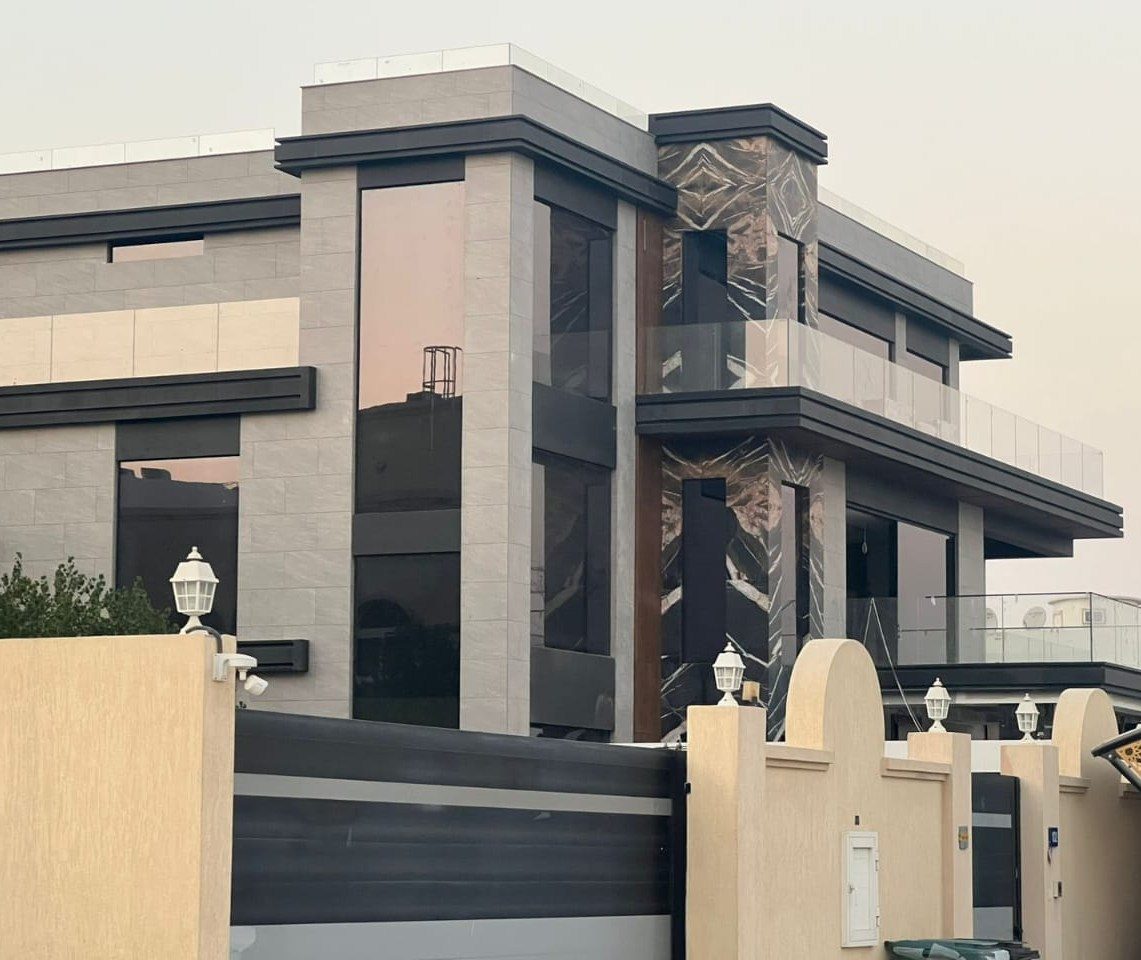
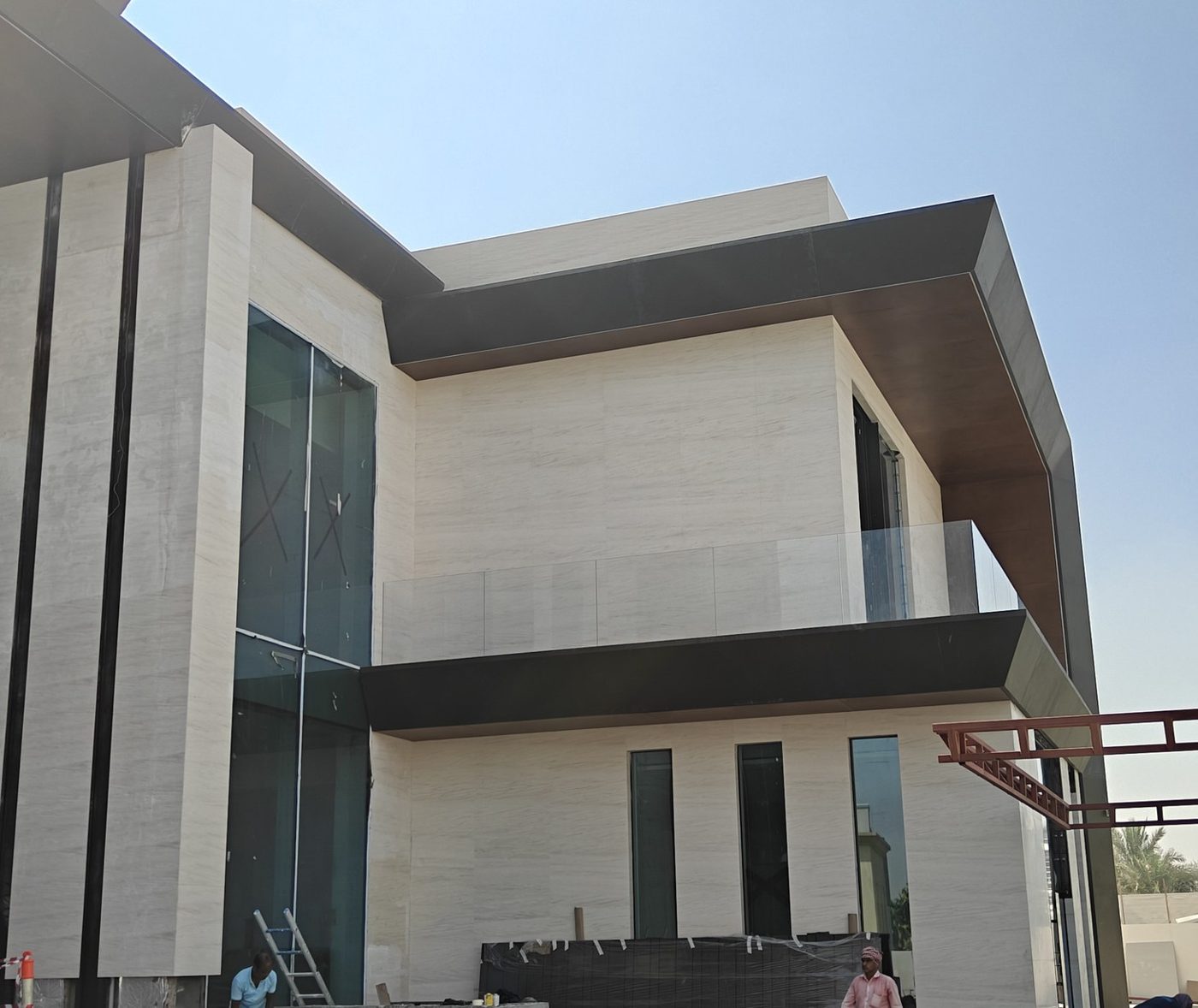
Where glass guards a fall, such as a balcony, terrace or staircase, the specification normally requires laminated or toughened-laminated glass so that a cracked pane does not simply drop out. Frameless interior doors and shower screens are typically toughened. Your consultant sets the requirement; we confirm thickness and fixings against it. See our page on glass balustrades and staircases.
Heat is the real enemy in Dubai
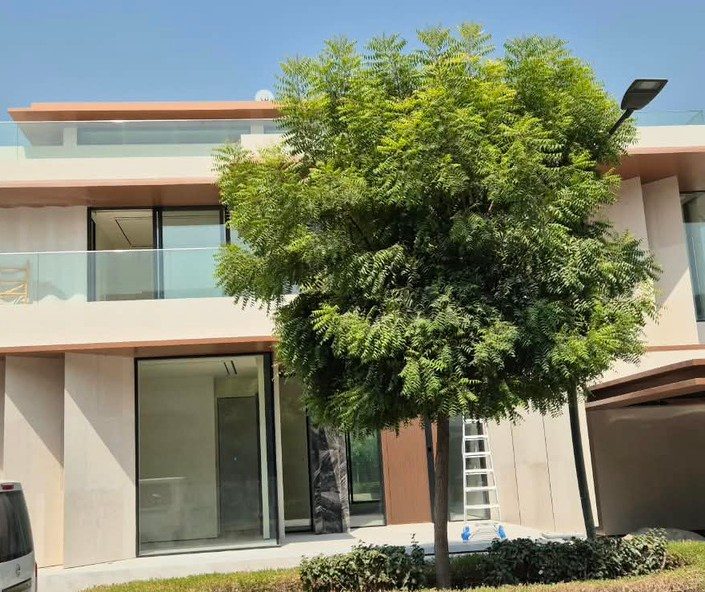
Large windows in a Dubai villa can turn a living room into a greenhouse. A double-glazed unit with a low-E or solar-control coating reflects much of the sun's heat while still passing daylight, which lowers cooling load and keeps rooms comfortable near glass. Tinting adds glare control, but a good coating is usually better than dark tint alone.
Sound, security and privacy
Laminated glass with a suitable interlayer reduces noise and is harder to break through. Frosted, etched or film-treated glass adds privacy. These can be combined, for example a laminated, frosted pane in a bathroom window. We cover these in decorative and privacy glass.
Questions to ask before you approve glass
- Is this glass toughened, laminated or both, and why?
- What is its thickness and does the drawing confirm it?
- For external glass, what is the coating and the unit build-up?
- Who supplies the shop drawings and are they approved before fabrication?
- Are edges and hardware suited to the location, indoor or outdoor?